
Do not use a generic interval table
A wrong oil, filter, exercise, or battery instruction can harm equipment or create a safety hazard. Use the exact model and serial number to obtain the current owner manual, and contact the manufacturer or qualified service provider when instructions are unclear.Start with the exact model and manual
Record the generator’s manufacturer, model, serial number, controller/transfer-equipment model, fuel, and hour-meter reading. Use those details to obtain the current operator manual and maintenance schedule. Cummins directs owners to the exact Operator Manual because schedules vary by generator; the same manual-first approach avoids applying a different model’s oil, filter, plug, or exercise instructions.
Follow both the calendar intervals and operating-hour limits stated in the manual, including any tighter requirements for unusual conditions. If your installation uses optional components, check their separate documentation too.
Owner checks: observe, record, and report
Only perform checks that the manual says an owner may perform, and only when the equipment is in the state the manual specifies. A conservative observation list is:
- Read the controller display or monitoring alert; record any warning or fault exactly as shown.
- From a safe position, look for visible enclosure damage, blocked airflow, debris, or an unusual change in sound or exhaust.
- Check that required access around the equipment remains unobstructed, without moving guards or opening the enclosure.
- Note the hour-meter value and whether the scheduled exercise occurred, if the manual provides those indicators.
- Follow the manual for any permitted exterior cleaning or routine owner inspection.
Do not touch wiring, fuel lines, hot surfaces, moving parts, or wet equipment. Do not open the enclosure or reset a fault unless the manual specifically directs the owner to do so. If you smell gas, leave the area without operating electrical devices and contact the gas utility or local gas authority from outside.
Exercise schedules and alerts are model-specific
Exercise timing, duration, speed, loading, and whether a run is skipped after recent operation can differ among models and controller settings. Use the current manual and installed controller configuration; do not assume that every unit should run weekly, that a loaded exercise is required, or that one schedule is suitable for every location.
If an exercise does not occur, an alert appears, or the generator behaves differently than the manual describes, record the message and contact the manufacturer’s authorized service channel or qualified technician. Do not change control settings or run a transfer test based on a generic online checklist.
When to use qualified service
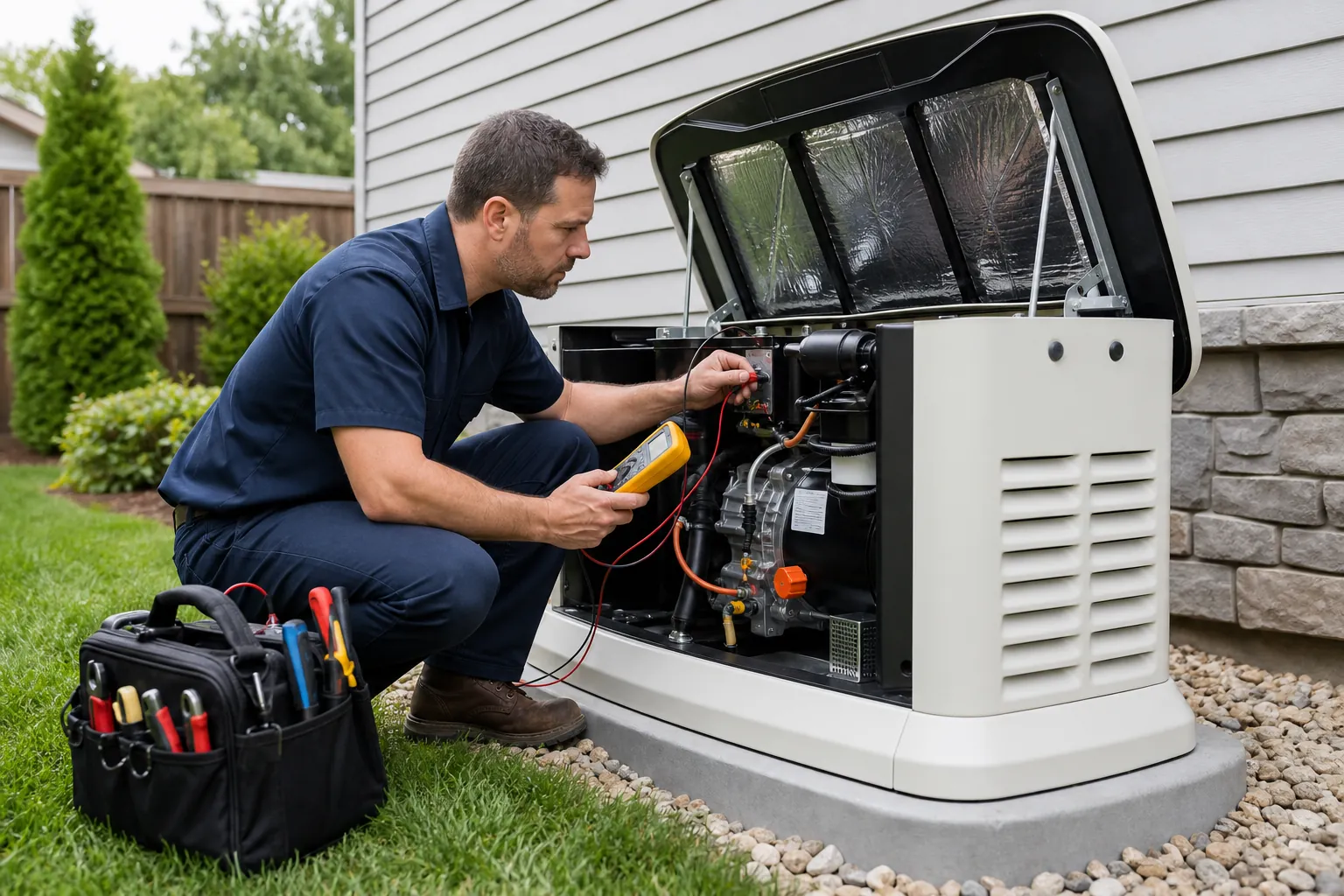
Use a service provider qualified for the exact brand and equipment for tasks the manual reserves for trained personnel, including electrical/transfer-system work, fuel-system inspection or adjustment, internal repairs, and any work involving hot, moving, or energized parts. Ask for the service scope in writing, the applicable maintenance-manual references, and a record of findings and parts used.
There is no universal annual price or appointment duration established here. Request a current local quote that identifies travel, inspection, parts, labor, after-hours response, and any separate work not included in routine service.
Keep a maintenance record
Store the model/serial details, manuals, receipts, service reports, controller alerts, and hour readings together. A blank log is provided below; it is a template, not a record of work performed by Standby Generator Guide or by a named service company.
| Date | Hour reading | Observation or task per manual | Person / service provider | Next due per manual |
|---|---|---|---|---|
After a long outage or extended run
Use the manual to determine whether extra inspection or service is due after extended operation. Record the hour-meter reading and any warnings. Do not open, refuel, adjust, or service a permanently installed unit unless the owner manual explicitly authorizes the task and describes how to do it safely.
If the unit was flooded, struck, exposed to a suspected gas leak, or operated abnormally, keep away and contact qualified service before reuse. CPSC cautions that wet electrical equipment can be hazardous and should be professionally inspected before operation.