
Whole house generator installation at a glance
The exact sequence and responsible trade vary by jurisdiction, contractor and equipment. Use this table to make sure the written proposal identifies who owns each step rather than assuming it is included.
| Stage | Typical lead | What the homeowner should verify |
|---|---|---|
| Load & site assessment | Qualified installer / electrical professional | Backed-up loads, motor starts, exact model/fuel, panel, fuel capacity, proposed location and site constraints. |
| Design & written scope | Installer with required licensed trades | Generator and ATS model numbers, load-management plan, electrical/fuel routes, exclusions, allowances and service responsibilities. |
| Permits & approvals | Contractor and/or homeowner, depending on local rules | Who applies, required inspections, utility coordination, HOA/property approvals and any conditions before work starts. |
| Pad / site preparation | Installer or site contractor | Manufacturer-approved base, drainage, access, clearances, exhaust direction, service space and restoration scope. |
| Fuel work | Qualified gas / propane professional as required | Fuel type, capacity, pressure/flow, pipe route and size, meter/regulator or tank work, testing and permit scope. |
| Electrical & transfer equipment | Qualified electrical professional | ATS/service arrangement, backed-up circuits, load management, wiring/conduit route, panel work and required shutdowns. |
| Inspection & commissioning | Authority having jurisdiction + installer | Required inspection status, startup/transfer test, alarms, operating limits, final configuration and unresolved punch-list items. |
| Owner handoff | Installer and homeowner | Manuals, model/serial records, warranty registration, maintenance schedule, service contact and safe operating instructions. |
For the related budget and equipment decisions, see the whole house generator installation cost breakdown, pad and placement guide, automatic transfer switch guide, permit and local-requirements guide, and three-quote comparison tool.
1. Whole house generator site and load assessment
Whole house generator installation should start with a site-specific load and property assessment. A qualified local professional should review which loads the homeowner expects to back up, the exact generator/fuel options, the electrical service and panel, available fuel, potential equipment locations, and applicable local requirements. Bring photographs and model numbers for HVAC, pumps, and other large loads. Square footage alone is not enough information for a project design.
The professional should confirm the manufacturer’s current installation manual and the fuel and electrical conditions required for the selected equipment. This publication has not surveyed a property or produced an electrical load calculation.
2. Ask for a complete written proposal
Before accepting a proposal, check that it identifies exact equipment and makes the installation boundaries clear:
- Generator model, fuel, rating, transfer switch/ATS model, panel/service arrangement, and any load-management accessories.
- Which circuits are included, which loads may be shed, and how the system is expected to operate.
- Fuel and electrical connection scope, routes, meter/regulator or panel work, and any allowances.
- Site preparation/base, restoration, permits, inspections, utility coordination, commissioning, and owner orientation.
- Written exclusions, warranty responsibility, future service provider, schedule, payment milestones, and change-order process.
Generac describes its own dealer consultation as covering placement, installation-site requirements, system requirements, fuel source/connection, and property restrictions; exact scope varies by manufacturer and project.
3. Confirm permits and approvals
Permit types and required approvals vary with the property, equipment, utility, and jurisdiction. Ask the contractor which permits and inspections are required, who obtains them, which edition/local amendments apply, and whether HOA/property approvals or utility coordination are needed.
Do not accept “no permit is needed” without confirmation from the relevant local authority. Do not start electrical or fuel-system work until the required approvals are in place.
4. Site preparation, equipment setting, and connections
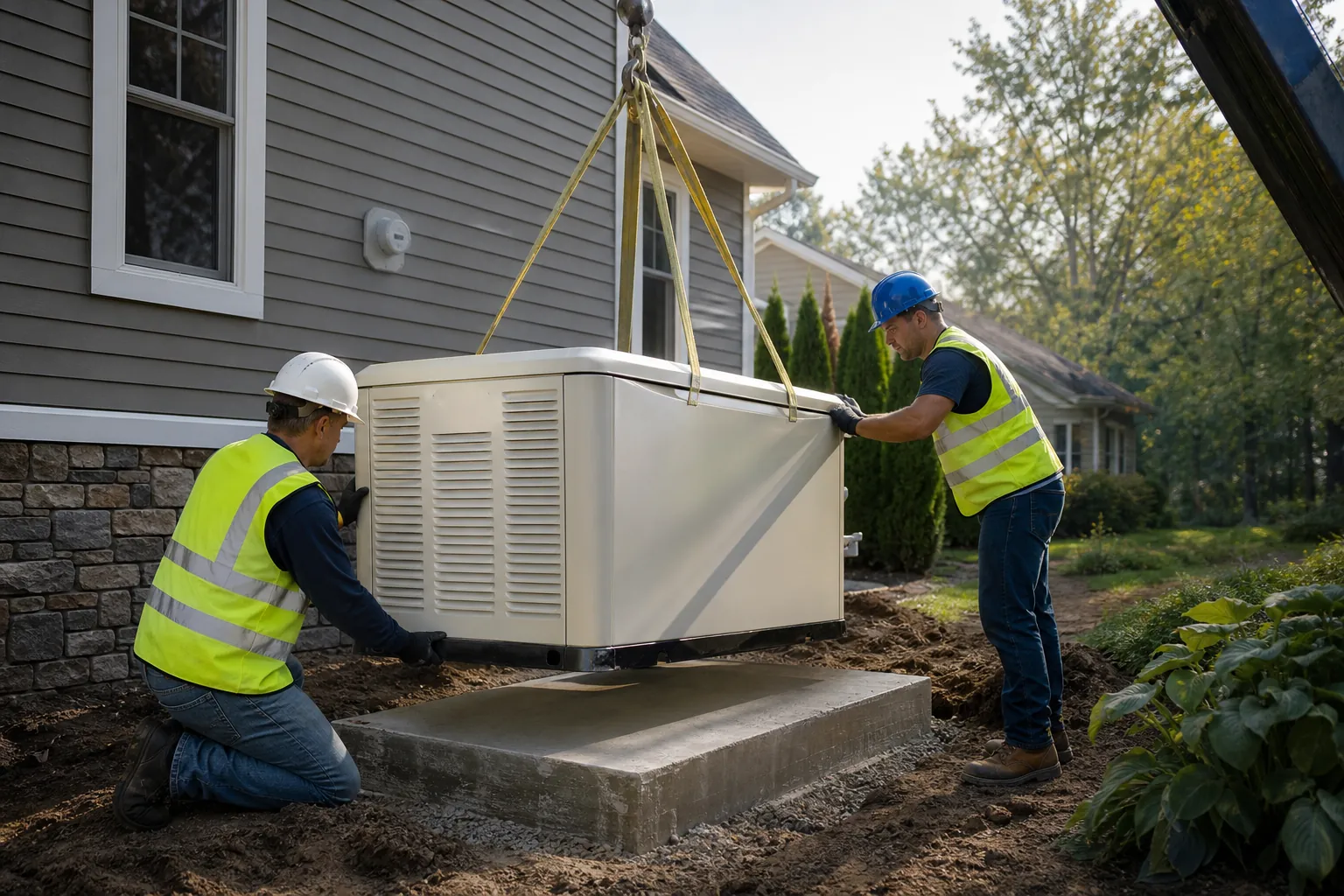
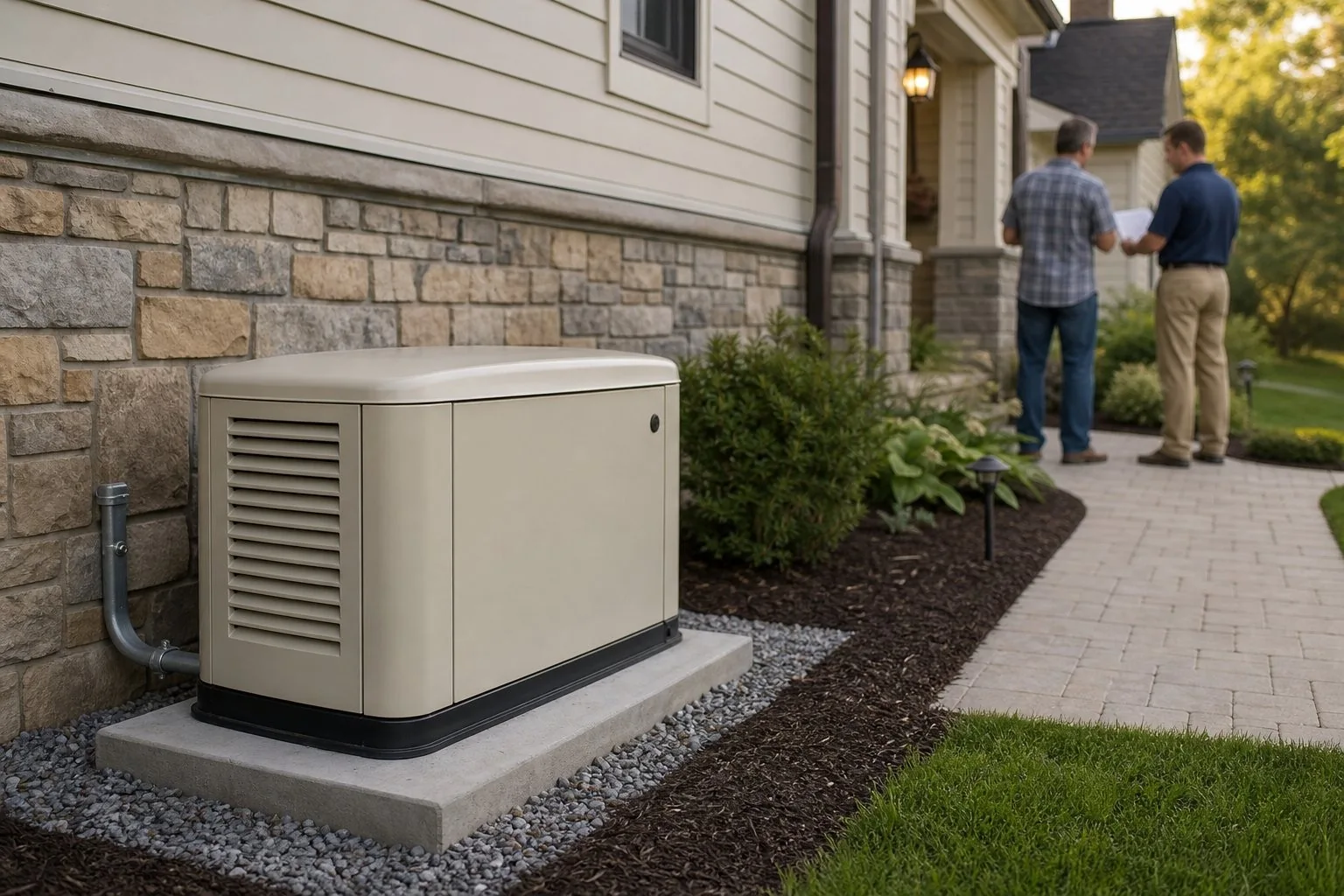
The exact installation sequence depends on the equipment and site. The work may include preparing an approved mounting base, placing the generator, routing fuel and electrical connections, installing the specified transfer equipment, and completing required inspections. A professional must follow the model’s current manual for clearances, exhaust, ventilation, access, fuel pressure/flow, wiring, and mounting.
5. Inspection, commissioning, and handoff
Before the contractor leaves, confirm the required authority inspection has occurred or has a documented schedule. Ask the installer to explain the correct operating modes and demonstrate the system’s manufacturer-prescribed startup/transfer test.
Request the final model/serial details, permits/inspection records, manuals, warranty and registration information, operating limits, maintenance schedule, service contact, and instructions for alarms or shutdowns. Keep the written load/transfer configuration and any approved changes with the records.
Project timing depends on preparation and approvals
Generac says physical installation usually takes hours, while preparation may take multiple weeks; dealer availability, site preparation, gas work, and permits affect timing. That is a manufacturer’s general description—not a guaranteed schedule for another brand, contractor, or jurisdiction.
Ask for a written schedule that distinguishes equipment availability, permit/utility approval, site preparation, on-site work, inspection, and commissioning. Storm-related demand or local backlogs may change the dates.
Homeowner checklist
- Keep access clear to the panel, fuel equipment, and planned generator site during scheduled work.
- Confirm pets/children remain clear of the work area and identify any temporary utility interruption in advance.
- Obtain written confirmation of each permit/inspection responsibility.
- Do not operate the generator until it has been installed, inspected as required, and commissioned according to the manufacturer instructions.
- Save the final documents and set reminders based on the exact manufacturer maintenance schedule.
Related decision path
Connect installation to sizing, cost and equipment
Installation scope only makes sense when the backed-up loads, generator configuration and quote assumptions are explicit.